What small-space living means for the next generation of entryway organizers — and why home décor buyers should rethink the category.
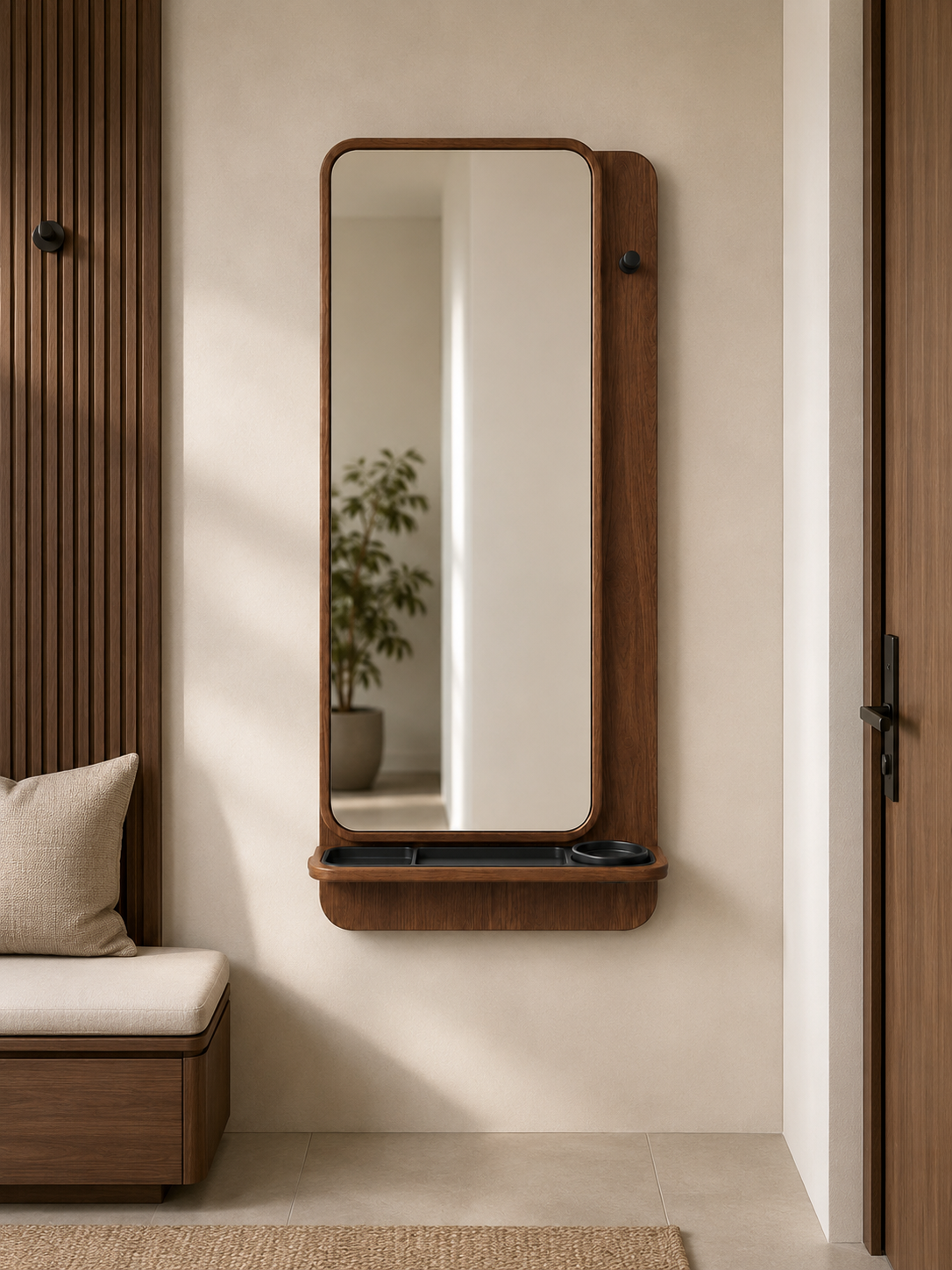
For years, entryway furniture followed a familiar formula: a console table, a mirror, a coat rack and perhaps a storage bench.
It made sense in a spacious house.
But what happens when the entrance is barely wider than the front door?
For a growing segment of urban apartment shoppers and small-home consumers, a conventional hallway furniture arrangement simply takes up too much space.
This raises an interesting question for home décor retailers:
Are we still designing entryway assortments around the size of the furniture rather than the way people actually live?
1. The Entryway Is Becoming a Daily-Life Station
Think about what people do when they arrive home.
They put down their keys. Hang a jacket. Leave the mail. Remove a bag. Sometimes they need somewhere for an umbrella, headphones or a phone.
These activities happen in a very small area.
Traditionally, retailers have offered separate products for each task.
A coat rack for jackets.
A tray for keys.
A console for decorative objects.
A cabinet for storage.
But an apartment entrance may not accommodate all four.
This creates an opportunity for a different type of product: a compact entryway organizer that combines several everyday functions within a single structure.
The design challenge is not to add more storage.
It is to organize essential activities without making the entrance feel crowded.
2. From Furniture Pieces to Wall-Based Storage
One of the most practical opportunities lies in vertical space.
A wall-mounted organizer can introduce useful storage without occupying the same floor area as a console table.
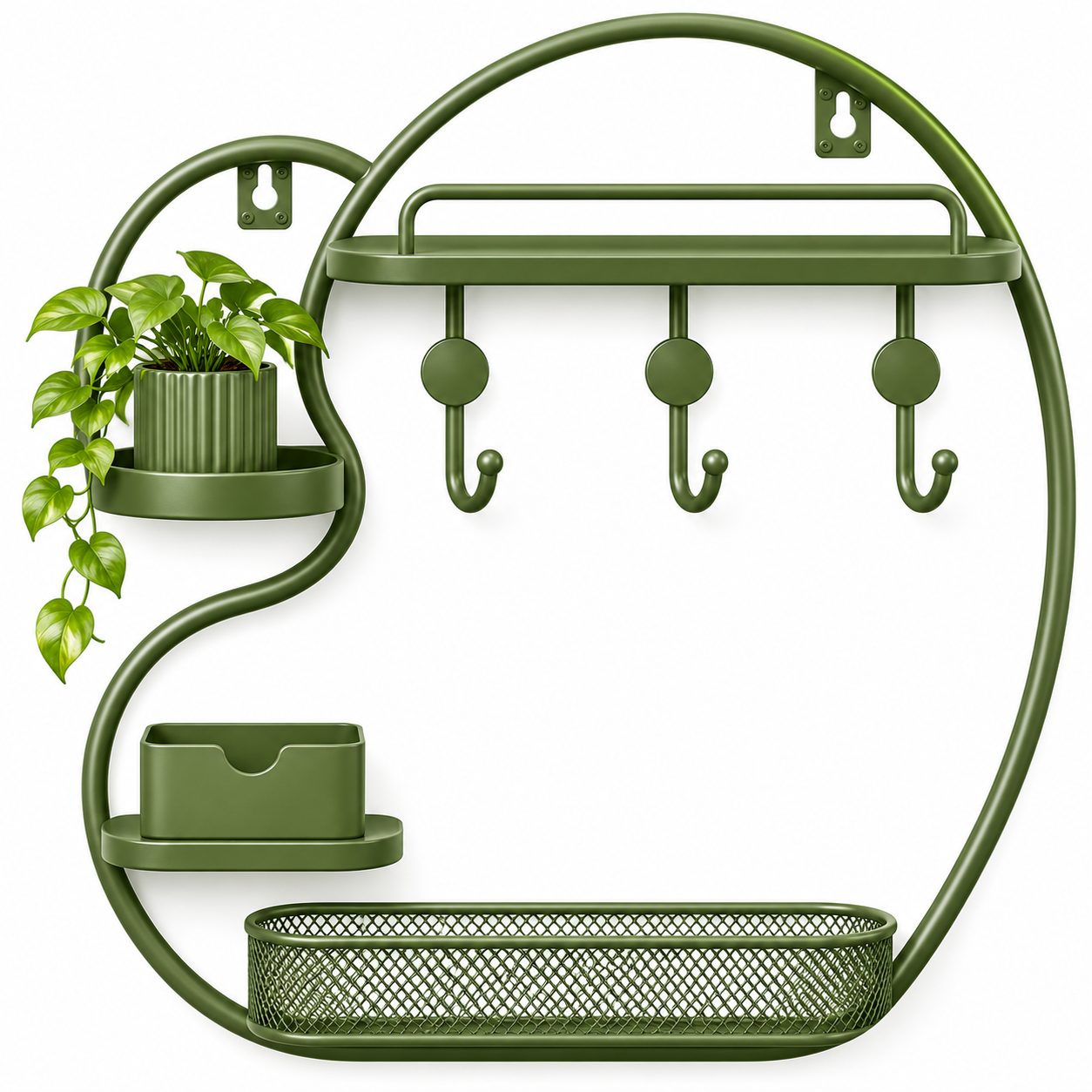
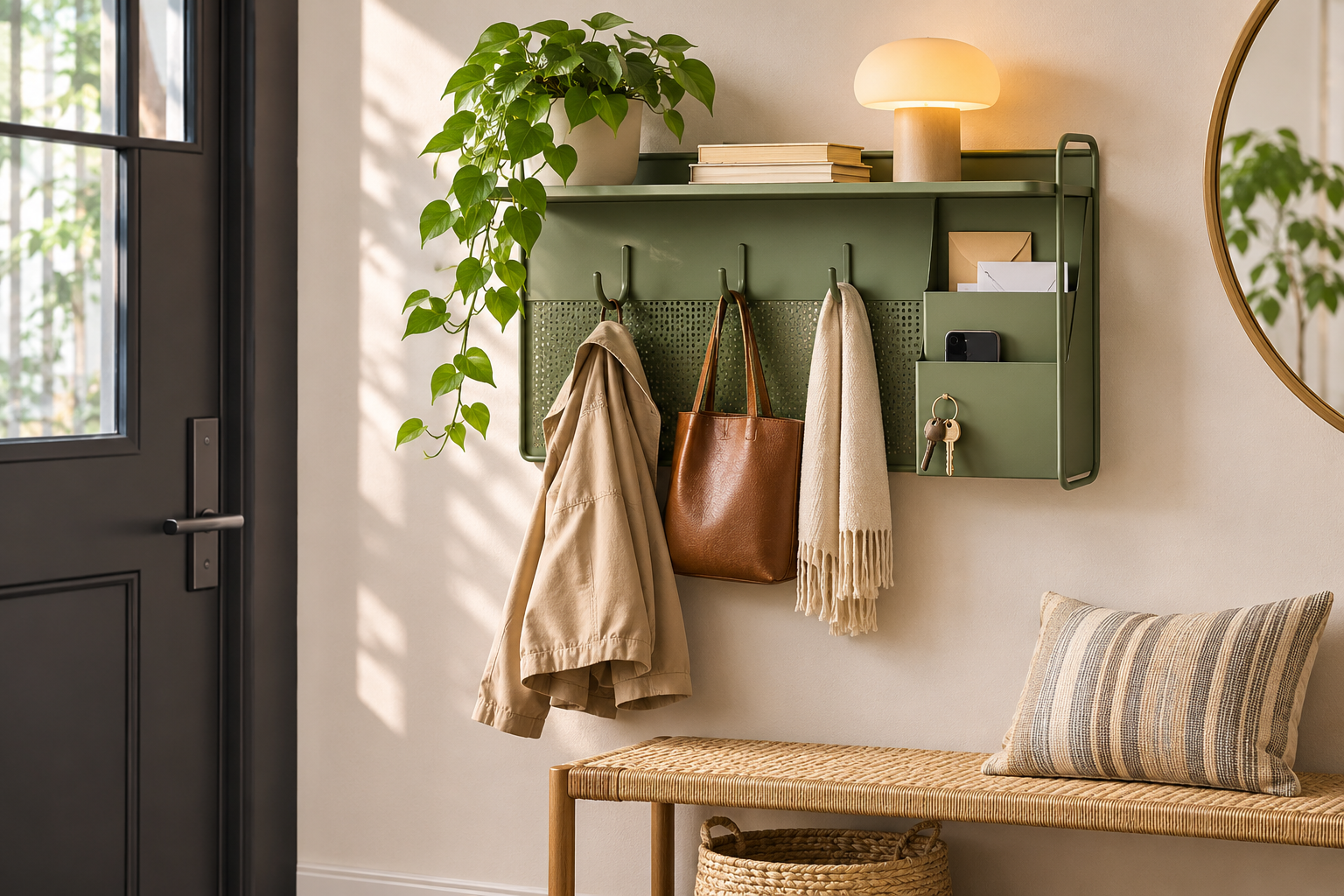
For example, a compact design might combine:
- Three hooks for bags, jackets or accessories.
- A narrow upper shelf for small objects.
- Side compartments for keys and mail.
- A lower storage channel for everyday essentials.
- A shallow metal frame that reduces visual bulk.
The exact arrangement should depend on the intended customer and installation environment.
For a retailer, the advantage is straightforward: one product can answer several consumer needs.
This does not mean every entryway needs a wall-mounted system.
It means wall-based storage deserves a more important place in the product assortment.
3. A Beautiful Organizer Is Not Necessarily a Useful One
This is where design decisions become commercial decisions.
Consider two products.
Product A: A decorative wall shelf with three attractive metal hooks.
Product B: A wall organizer with hooks, a shallow shelf, separate compartments and a carefully considered overall depth.
Product A may photograph beautifully.
Product B may solve more everyday problems.
However, additional functions are only valuable when they work properly.
Hooks need usable spacing. Compartments need appropriate dimensions. Wall fixings need to suit the intended loads and installation surfaces.
A poorly designed multifunctional product can be less practical than a simple hook rail.
The winning design is not necessarily the one with the most features.
It is the one that makes everyday organization feel effortless.
4. Why Metal Has an Interesting Role in This Category
Material selection influences both appearance and function.
Metal can be particularly suitable for slim entryway organizers because it allows relatively narrow structural elements, clean lines and a wide range of powder-coated finishes.
It also offers opportunities for integrated hooks, trays and compartments.
For a contemporary retail collection, consider these colour directions:
| Finish direction | Retail positioning |
|---|---|
| Matte olive green | Natural, warm contemporary |
| Powder blue | Soft modern, youthful |
| Warm ivory | Minimal, versatile |
| Charcoal black | Industrial, urban |
| Muted terracotta | Expressive, decorative |
Colour alone is not enough to differentiate a product.
The finish should work with the proportions, structure and intended retail setting.
A thin metal frame in soft olive green may feel residential and welcoming, while the same structure in charcoal black may suit an industrial collection.
The underlying design can remain familiar, but the merchandising story changes.
5. What Should a Retail Buyer Actually Stock?
Instead of purchasing ten unrelated entryway products, retailers could build a smaller, more coordinated collection.
A practical starting assortment might include three product roles.
The Entry-Level Organizer
A compact wall-mounted piece with a shelf and several hooks.
Its purpose is to provide an accessible, space-saving option for apartments and narrow entrances.
The Multifunctional Organizer
A larger design combining hooks, compartments and several storage levels.
This product offers stronger functional differentiation and can become the focal piece of the collection.
The Flexible Organizer
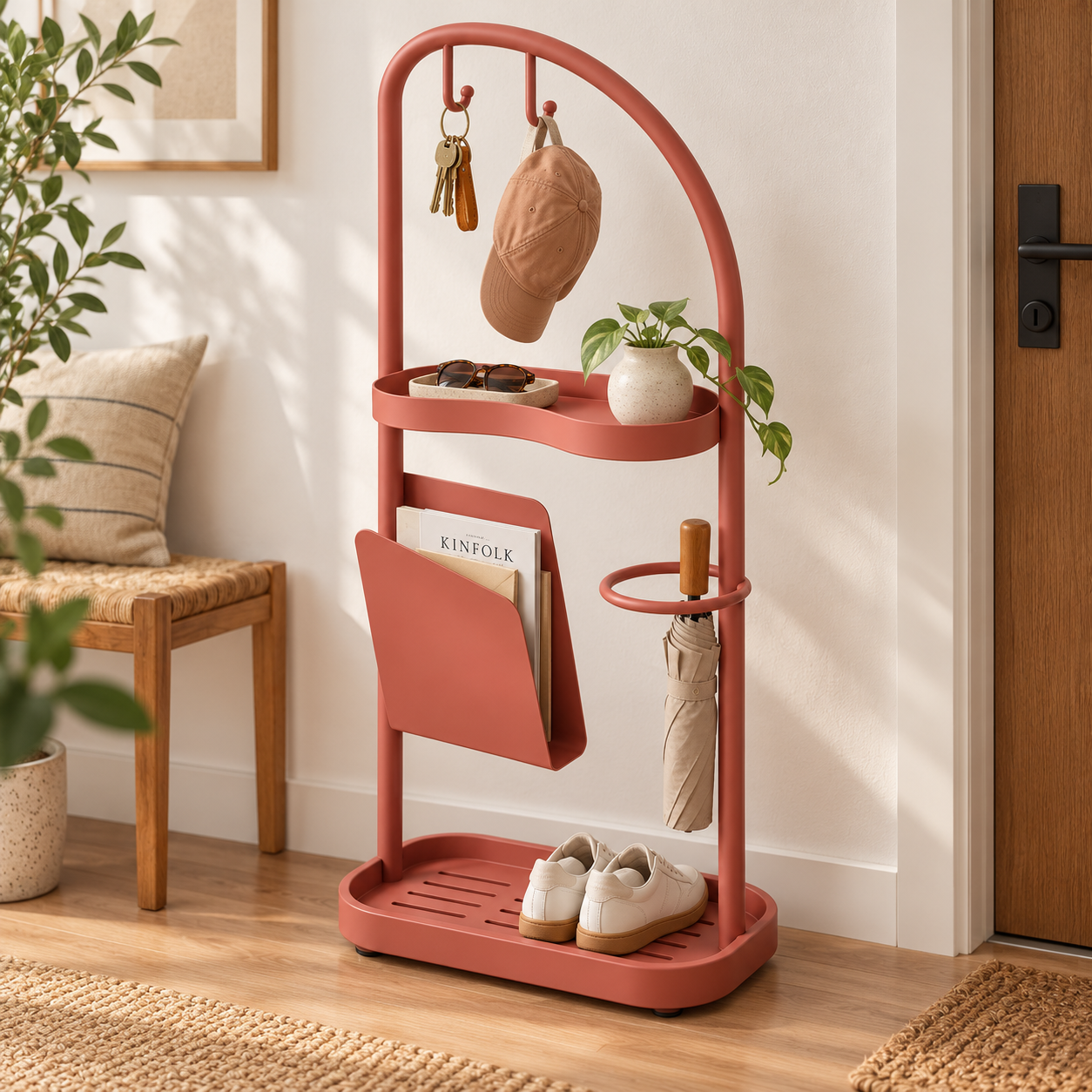
A product that can be wall-mounted or used as a freestanding accessory, provided its construction has been designed and tested for both applications.
It offers consumers greater placement flexibility.
These three roles can be developed with coordinated materials, colours and design details.
For retailers, a consistent collection is often easier to explain, photograph and merchandise than a group of unrelated products.
6. What Teruier Is Exploring in Entryway Product Development
At Teruier, entryway storage is an area where decorative design and functional product development can meet.
Potential design directions include slim metal wall organizers, integrated hook-and-shelf systems, side storage compartments and flexible installation concepts.
The design process starts with the user’s everyday activities and then considers proportions, material choices, structural feasibility and the overall appearance.
For example, increasing the spacing between hooks may improve the usability of a wall organizer without increasing its overall width significantly.
Adding a shallow side compartment may offer a place for small accessories while keeping the product visually compact.
These are relatively modest design decisions, but they can change how useful a product feels in daily life.
Teruier works with home décor buyers, importers and brands interested in developing products that connect practical requirements with distinctive retail presentation.
The goal is to help buyers create products with a clear purpose, rather than simply adding more styles to a catalogue.
7. Three Questions for the 2027 Buying Season
Before adding another entryway product to a collection, buyers should consider three questions.
First: What problem does this product solve?
If the answer is simply that it looks attractive, its retail positioning may be too weak.
Second: Does the product justify the space it occupies?
This is especially important for customers living in apartments or narrow urban homes.
Third: Can it become part of a coordinated product family?
A collection with consistent colours, materials and functions offers more opportunities for merchandising and future development.
Frequently Asked Questions
What is an entryway organizer?
An entryway organizer is a storage product designed to keep everyday items such as keys, bags, coats and small accessories accessible near the entrance of a home.
Are wall-mounted entryway organizers suitable for small apartments?
They can be a useful choice because they utilize vertical space and reduce the need for additional freestanding furniture. Installation suitability and mounting requirements must still be considered.
What materials work well for modern entryway organizers?
Powder-coated metal, wood and combinations of materials can all be suitable. The best choice depends on the intended design, function, budget and installation requirements.
Can entryway organizers be customized for wholesale collections?
Product development may include changes to dimensions, finishes, hook arrangements, compartments and overall construction, subject to feasibility and agreed specifications.
Final Thought: Sell the Solution, Not Just the Furniture
The next opportunity in entryway furniture may not come from creating a bigger cabinet or a more decorative console.
It may come from understanding how people use a space that is already too small.
For home décor retailers, this opens a different way to think about product selection.
Less floor space.
More purposeful design.
Better coordination between storage and decoration.
At Teruier, we see compact entryway organization as an opportunity to connect everyday living needs with thoughtful product development.
Explore opportunities to develop coordinated entryway organizers, wall-mounted storage and functional home décor collections with Teruier.