Five functions. One product. Smaller footprint. Higher perceived value.
It sounds like the perfect pitch for a new home organization collection.
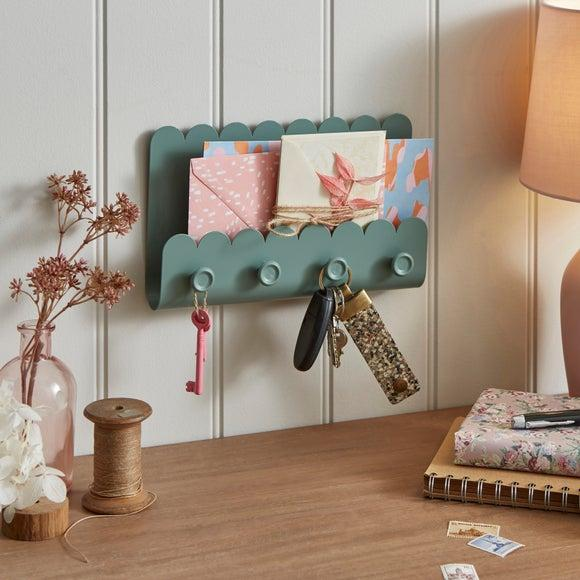
A curved entryway organizer has hooks, a tray, a magazine pocket, an accessory holder and a lower shelf. A wall organizer has three storage levels and hanging hooks. A rolling cart offers open and concealed compartments.
The product photographs look convincing.
But here is the question too few people ask:
Can customers actually use all those functions together?
For buyers sourcing decorative home storage, the number of features is not the same as functional value.
A product may offer five functions individually, yet become inconvenient when two or three are used at once.
That distinction should influence design development, sample approval and wholesale purchasing decisions.
The Problem Nobody Notices in a Product Rendering
Imagine an entryway organizer with a hanging hook above a storage pocket.
In the rendering, the hook is empty and the pocket is perfectly visible.
Now hang a jacket or small bag on the hook.
Does the hanging item obstruct the pocket? Can the customer still reach the tray? Is there enough room to remove a magazine?
These are hypothetical questions, not identified defects in any particular Teruier product.
Yet they illustrate a common design risk: functional interference.
Functional interference occurs when one feature makes another feature less convenient or less usable.
A product can look beautifully organized while empty and become surprisingly awkward during everyday use.
The buyer’s task is to discover that problem before it becomes a customer complaint.
A Real Product Example: TDS27-04 Sage Three-Tier Wall Organizer
Teruier’s TDS27-04 Sage Three-Tier Wall Organizer illustrates the product-development opportunity.
The wall-mounted design measures 38 × 14 × 82 cm and combines a top tray, perforated middle basket, angled lower pocket and three hanging hooks.
Its compact, vertical structure makes the concept attractive for entryways and smaller residential spaces.
But a responsible buyer should move beyond counting the compartments.
The next review should ask:
Can the upper tray be accessed comfortably after the organizer is mounted?
Can a customer remove something from the middle basket without disturbing the contents of the lower pocket?
When the hooks are occupied, is there sufficient usable clearance?
And what happens when several compartments are loaded within their intended limits?
The published product information identifies the final load capacity, mounting hardware and structural material as details requiring confirmation.
That transparency is important.
The design concept and the validated product specification are not the same stage of development.
Another Example: TDS27-06 Coral Entryway Valet Organizer
The TDS27-06 Coral Entryway Valet Organizer provides a different challenge.
This freestanding design measures 42 × 30 × 118 cm and incorporates two upper hooks, a shallow tray, an angled pocket, a circular side holder and a slotted base.
Its curved, asymmetric form creates a distinctive visual identity.
However, asymmetry and multiple storage points introduce practical questions.
For example, how should the product behave when items are placed mainly on one side?
Does an object hanging from the upper section interfere with the tray below?
Can the side holder accommodate the intended accessories without affecting stability or access?
These questions require physical evaluation.
The website does not claim that load ratings and stability testing have already been finalized.
Buyers should confirm those requirements before describing specific loading capabilities or expanded uses in retail listings.
An attractive form can communicate the design idea. Only appropriate verification can support the functional claims.
The Three Tests a Multifunctional Product Really Needs
A useful approach is to evaluate the product at three levels.
Test 1: Independent Function
Can each feature perform its intended task?
For a storage organizer, this may involve checking usable compartment dimensions, hook clearance, lid movement, storage access and compatibility with representative everyday objects.
This is where most visual product reviews begin.
But it should not be where they end.
Test 2: Simultaneous Function
Can several features operate at the same time?
Use realistic combinations of intended objects, within provisionally controlled and ultimately verified loading conditions.
For example, check whether access to a tray is obstructed by an occupied hook, or whether books in one compartment block a nearby opening.
A separate function may work correctly yet create a poor overall experience when combined with other functions.
This is the central test of a multifunctional design.
Test 3: Repeated Everyday Use
Does the product remain convenient during ordinary repeated handling?
Review the intended interaction sequence: placing, hanging, removing, reaching, opening and returning objects.
Check whether the design requires awkward movements or creates unintended contact between components.
Functional usability review does not replace structural, stability, mounting or other applicable safety testing.
Both are necessary where relevant.
The Buyer Should Ask for a Use-Case Matrix
A conventional specification sheet identifies product dimensions and materials.
For multifunctional products, an additional use-case matrix can be valuable.
| Intended Use | What to Verify |
|---|---|
| Hanging accessories | Clearance and approved hook loads |
| Using the upper tray | Access when adjacent features are occupied |
| Storing magazines | Internal dimensions and removal space |
| Using side holders | Object compatibility and interaction with other features |
| Using multiple functions | Combined loading and user access |
| Installing or positioning | Mounting suitability or freestanding stability |
The matrix should distinguish between proposed functions, tested functions and approved product claims.
For example, the presence of a circular holder does not automatically establish suitability for umbrellas of every size and weight.
Similarly, a decorative lower tray should not be advertised for heavy footwear unless its intended use and capacity have been verified.
Teruier’s Home Decor Spec Sheets: Where Pretty Products Go to Become Real Business explains the value of connecting design information with commercial purchasing requirements.
A use-case matrix extends this principle into everyday product interaction.
Sometimes Removing a Feature Makes the Product Better
This is the most controversial part of multifunctional product development.
A designer may add another hook, tray or compartment because it seems to increase value.
But what if the additional feature creates poor access, increases manufacturing cost or complicates packaging?
In that case, removing it may improve the product.
Consider a hypothetical design review.
A wall organizer has four hooks. Two are positioned so close to an adjacent storage compartment that larger intended hanging items would obstruct access.
The design team could consider wider spacing, fewer hooks or a different compartment arrangement.
Four features are not inherently better than three.
The better solution is the one that supports the intended user and remains commercially feasible.
This also applies to larger products.
Teruier’s TDS27-03 Dusty Rose Rolling Media Cart combines open and concealed storage formats with caster wheels.
The relevant development question is not simply how many compartments the cart contains.
It is whether their arrangement remains accessible and whether the approved structure performs as intended during movement and use.
What Should Wholesale Buyers Approve Before Ordering?
For a new multifunctional home storage product, the final review should cover three different approvals.
Design approval: Is the product visually suitable for the intended retail market?
Functional approval: Do the intended features work individually and together, with appropriate dimensions and access?
Technical approval: Are structural materials, safe loads, mounting or stability requirements, packaging and production specifications established?
These approvals should not be confused.
A designer may approve the silhouette while a product engineer still needs to confirm structural performance.
A buyer may approve the intended function while packaging development remains incomplete.
A product becomes purchase-ready when the requirements needed for its intended market and use have been adequately resolved.
How Teruier Can Turn Functional Design Into Better Product Development
Teruier develops decorative home furnishings with design and manufacturing resources in Fuzhou–Minhou, China.
Its existing Storage Collection includes wall-mounted organizers, freestanding entryway products, rolling storage carts and decorative storage furniture.
These product formats provide useful starting points for international buyers.
For example, a buyer may prefer the appearance of a particular wall organizer but need greater spacing between hanging hooks.
Another buyer may want a narrower freestanding organizer with fewer compartments and more accessible storage.
Such changes should be evaluated through product drawings, physical samples, material selection and manufacturing feasibility.
The objective is not to claim that every proposed function has already been tested.
It is to identify the requirements that will make the final product useful, reproducible and appropriate for its intended application.
FAQ
Does more storage functionality always make a product more valuable?
No. Additional features create value only when they serve a real need and remain convenient, safe and commercially practical.
How should buyers evaluate multifunctional decorative home storage?
Buyers should review usable dimensions, individual functions, simultaneous access, intended loading, mounting or stability requirements and the final physical sample.
Can a beautiful organizer still have functional design problems?
Yes. Renderings may not reveal interference between hanging objects, trays and compartments. Physical sample review can identify usability issues before production.
Can buyers customize the arrangement of hooks and compartments?
Potentially. Changes to spacing, dimensions and structure can be discussed during development, but their feasibility and effects on stability, cost and manufacturing must be confirmed.
A Feature Is Not a Benefit Until Someone Can Use It
The next successful home storage product does not necessarily need more compartments, more hooks or a longer list of features.
It needs a clear understanding of how people interact with those features.
For international home décor buyers, the better development question is not:
“How many functions can we fit into this product?”
It is:
“How many useful functions can this product deliver without making everyday life more complicated?”
Teruier works with retailers, importers and home furnishings brands on decorative storage selection, product design development, sampling and sourcing coordination.
Contact Teruier to discuss your preferred storage designs, intended uses, dimensional requirements and sample-development priorities.