Quick Answer for Buyers
For ceramic decor wholesale, approve the form and the finish as separate decisions. An artichoke ornament may have the right silhouette but fragile leaf tips; a matte vase may look consistent in a photograph yet vary noticeably between samples. Buyers should review dimensions, acceptable glaze variation, base finish and packaging before selecting a range. Teruier helps develop and source ceramic décor against those buying requirements.
What European Fairs Suggest for Ceramic Ranges
At Maison&Objet’s 2026 In Materia presentation, crackled ceramics appeared alongside other materials valued for visible texture and craft. Ambiente Trends 27+ also places ceramics, crafted surfaces and the contrast between matte and glossy finishes within its interior directions. These signals support a collection built around material character rather than a single fashionable colour.
For a European buyer, the useful translation is a restrained core with a few expressive pieces: matte ceramic decor for year-round display, a glazed botanical object as a focal point, and patterned pieces where the retail concept calls for them.
An Illustrative Sample Review: The Artichoke That Needed Another Round
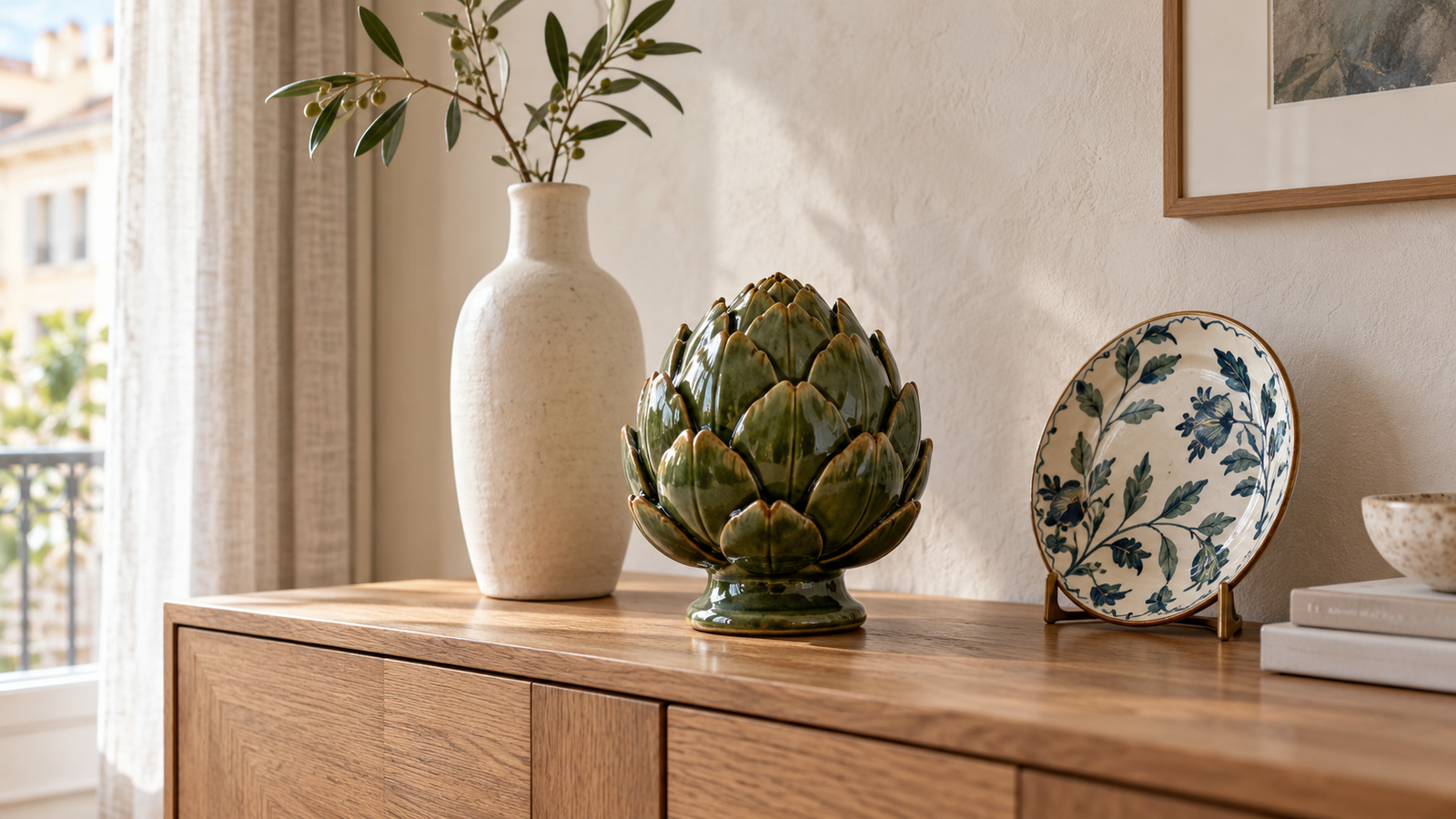
Consider a homeware buyer assembling a botanical ceramic edit. The first selection includes a chalk-finish vase, a glossy green artichoke ornament and a patterned decorative platter. A designer likes the contrast, but the artichoke ceramic decor sample raises two questions: its outer leaves project far enough to be vulnerable in transit, and its narrow base makes it appear unstable beside the lower vase.
Teruier’s revised sample brief keeps the recognisable artichoke form while reducing the projection of the outer leaves and widening the contact area at the base. The designer also asks for a deeper, less uniform green so the glaze follows the relief without making every leaf look identical.
For the Minhou ceramic and packaging workshops, those decisions become practical checks. The maker reviews how the form releases from the mould and how glaze gathers in the recesses. The packaging team designs support around the body of the ornament so that pressure is kept off the leaf tips. The buyer requests samples from more than one firing for comparison.
In this illustrative buying scenario, the buyer selects the revised direction for a range trial because the shape remains distinctive and the production questions are now documented. Bulk approval would follow only after finish range, packing and the final control sample are agreed.
Which Finish Suits Which Buying Role?
| Direction | Best use in a range | Main sample check |
|---|---|---|
| Matte ceramic | Calm, year-round vases and objects | Surface feel, colour consistency and marking |
| Gloss or reactive glaze | Focal pieces such as botanical ornaments | Glaze pooling and acceptable variation |
| Majolica-style decoration | Patterned accents and gift ranges | Motif clarity and repeatability |
Majolica ceramic decor should be described precisely. Traditional majolica involves a specific ceramic and glazing tradition; a contemporary piece with a similar colourful appearance may be better specified as majolica-inspired. A decorative platter should not be presented as food safe unless its materials and testing support that use.
What to Request from a Supplier
A handcrafted ceramic decor supplier should be able to show the buyer what variation is intentional and what counts as a defect. For each proposed SKU, request:
- product dimensions and intended decorative use;
- a signed finish sample or approved colour range;
- photographs of the base, edges and raised details;
- individual packing and master-carton information;
- a clear distinction between decorative items and products intended for food contact.
This makes the ceramic decor glaze finish part of the specification rather than a description left open to interpretation.
FAQ
Is matte ceramic always unglazed?
No. A matte appearance can come from a matte glaze or another surface treatment. Confirm the actual finish and its care requirements with the supplier.
How much glaze variation is acceptable in wholesale orders?
That depends on the design. Agree on a physical reference and an acceptable range of colour and pooling before production.
Is an artichoke ceramic ornament suitable for year-round retail?
Yes, particularly in a controlled green, cream or earthy palette. Its size and leaf detail should suit the intended shelf and packaging.
Can majolica-style pieces be sold as serving ware?
Only when the specific product is designed and appropriately documented for food contact in the destination market. Otherwise, present it as decorative.
What makes ceramic supplier evaluation more reliable?
Compare multiple samples, finish references, construction details, carton protection and the supplier’s response to a specific sample issue.
Build the Range from Approved Samples
A useful ceramic collection gives each piece a role: quiet core, textured contrast or decorative statement. Buyers developing matte vessels, glazed botanical objects or majolica-inspired accents can contact Teruier for available designs, finish samples, specifications, packing details and a quotation for their intended market.