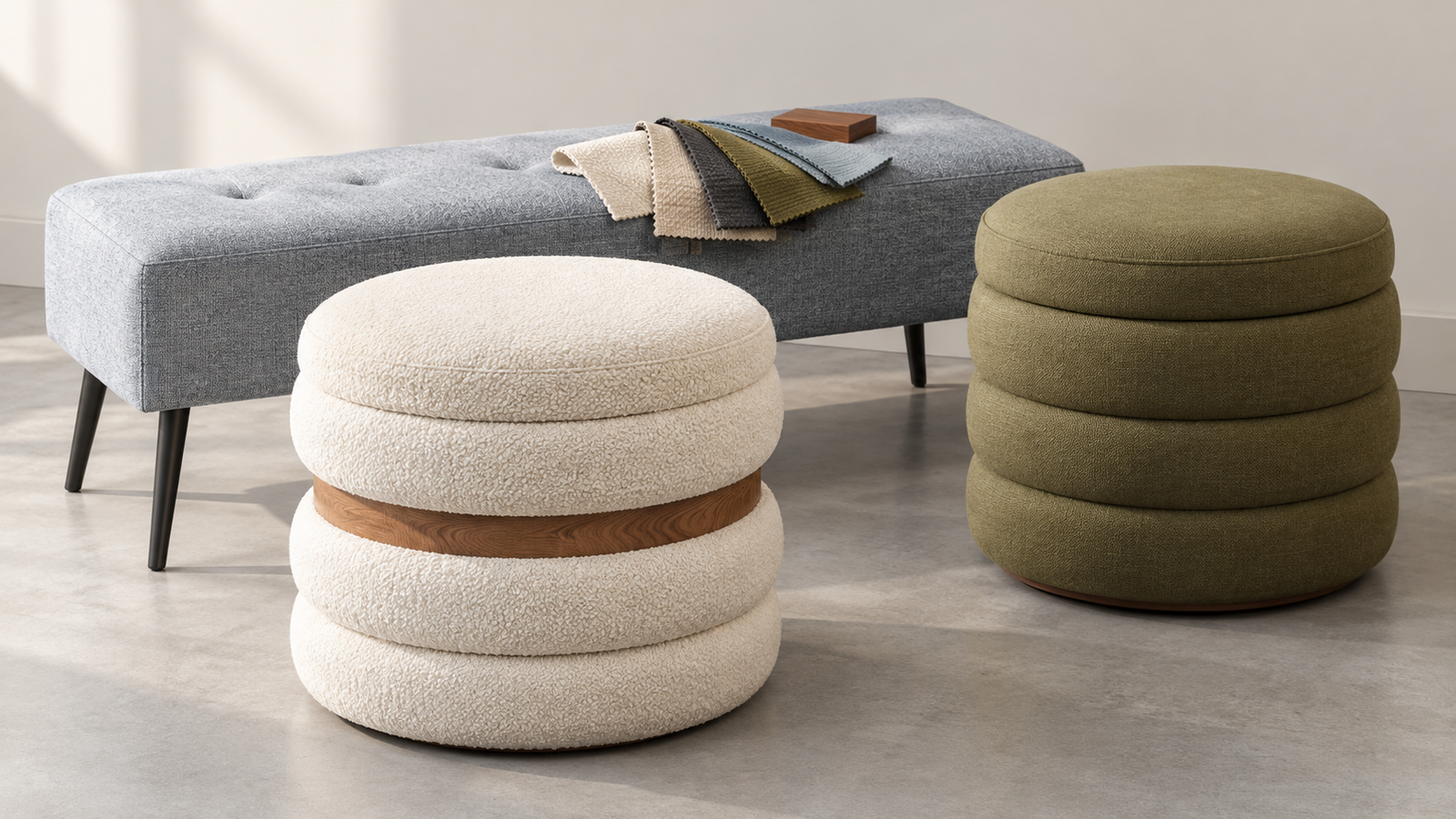
Choosing an upholstered stool is one decision. Deciding how it belongs beside a bench, a storage ottoman, and the rest of a retail assortment takes a broader view.
During a recent visit to Teruier’s showroom, Latin American buyers reviewed fabric swatches alongside physical seating samples. The scene illustrates a practical starting point for collection development: bringing materials and product forms together before defining the final selection.
For wholesalers and retailers, that process can help turn individual product choices into a more coherent accent seating range.
Begin With a Shared Material Direction
A coordinated collection does not require every piece to use identical upholstery. It needs a clear connection that buyers and shoppers can recognize.
That connection might come from a restrained color palette, a recurring texture, or a shared wood or metal finish. A neutral round stool, a patterned bench, and a storage ottoman can sit comfortably within the same assortment when their materials have been considered together.
The fabric book becomes a working tool for these decisions. Buyers can compare options against actual samples and identify which combinations deserve further development.
Give Each Product a Different Role
Adding more colors to one model creates variation. Adding complementary formats can give the collection a wider purpose.
For example, a buyer could explore the following arrangement:
| Product format | Possible assortment role |
|---|---|
| Compact upholstered stool | Occasional seating for smaller spaces |
| Upholstered bench | A longer seating option for bedrooms or entryways |
| Storage ottoman | Seating combined with concealed organization |
This is an illustrative planning approach, rather than a confirmed selection from the visit. The appropriate mix depends on the buyer’s customer, available display space, target pricing, and purchasing requirements.
Adapt the Fabric to the Form
An upholstery choice that works on a small stool may need another review on a longer bench.
Pattern scale, stripe direction, seam placement, and the size of the upholstered surface all influence the result. A bold fabric can become a focal point on one compact piece, while a quieter companion fabric may create balance across larger items.
For custom upholstered stools, this means reviewing the proposed fabric on the intended model. Where a material or construction changes, a revised sample may be needed before the combination is approved.
Keep the Development Brief Specific
Once a visual direction is shortlisted, it needs to become a clear development brief.
The brief should connect each model reference with its proposed fabric code, color, dimensions, base finish, and requested changes. Buyers should also identify which details are shared across the collection and which belong to individual products.
Material availability, minimum quantities, pricing, sampling requirements, and lead times then need confirmation for the selected combinations. This gives both sides a practical basis for deciding how many variations to develop.
FAQ
Can different seating models share the same upholstery?
Potentially, subject to material availability and suitability for each construction. The fabric should be reviewed on each selected model before final confirmation.
Develop a Collection With Teruier
Teruier welcomes buyers to discuss coordinated accent furniture using its seating samples and upholstery references as a starting point.
CTA:
Contact Teruier to discuss fabric options, selected seating models, and sample development for a coordinated stool, bench, and storage ottoman collection.