
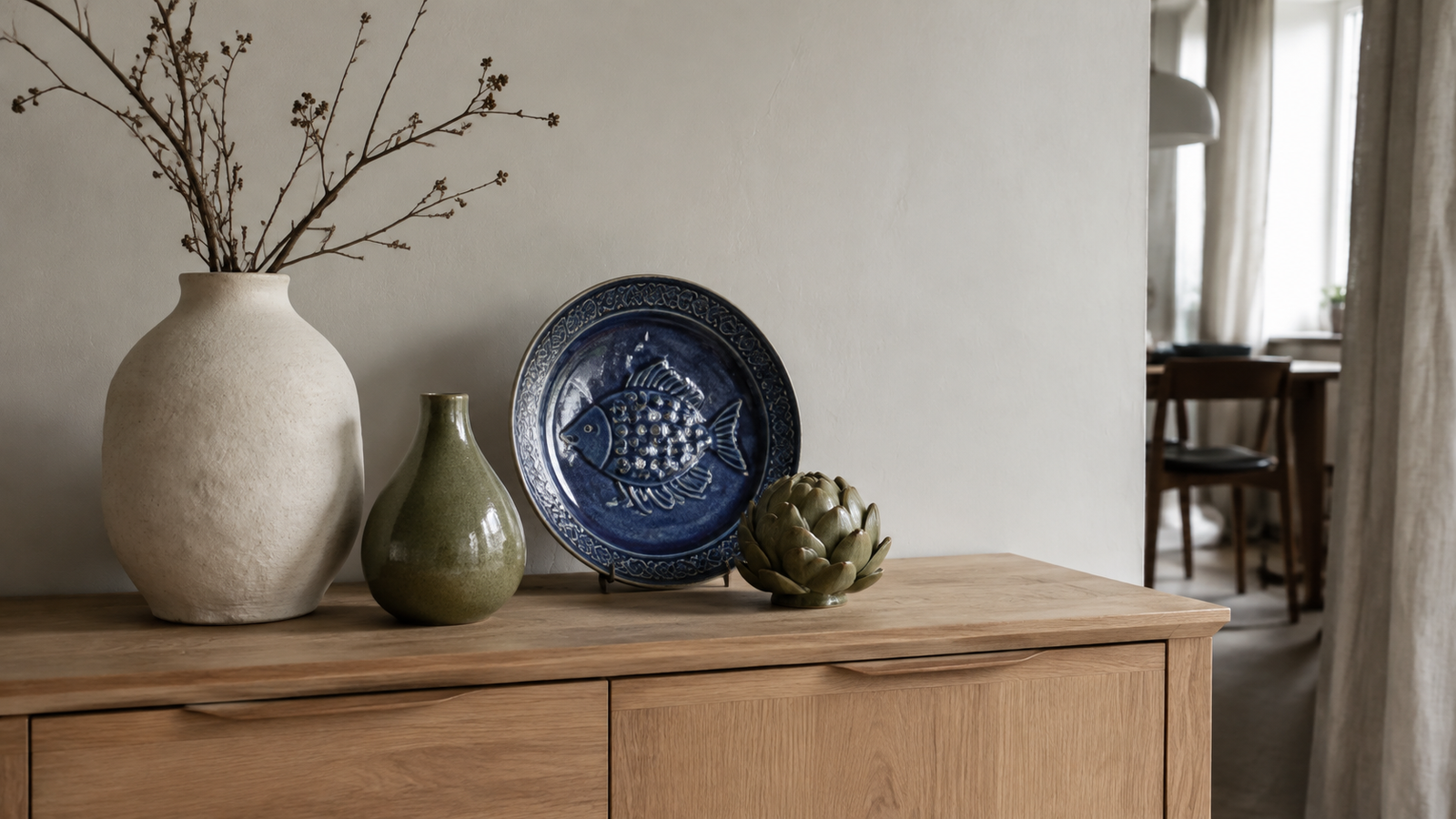
A German buyer does not normally select ceramic décor one vase at a time. The task is to build an assortment that looks coherent on a shelf, gives customers a reason to stop, and still works across different price points.
At the recent European fair cycle, material character has become more important again: tactile surfaces, visible irregularity and crafted finishes are being used to make everyday objects feel more considered. Maison&Objet’s In Materia presentation places crackled ceramics, veined wood and other expressive surfaces at the centre of this conversation, while Ambiente Trends 26+ translates global design signals into retail-ready ranges. Maison&Objet and Ambiente offer a useful direction, but buyers still need a practical range plan.
Start with Four Clear Product Roles
For a home décor retailer, a ceramic collection works best when each item has a defined role.
- Matte ceramic decor provides the quiet base: wabi sabi ceramic vases in chalk, sand, moss or warm grey for year-round shelves.
- Ceramic decor glaze finish creates contrast: a glossy or reactive-glaze piece can add light beside more muted forms.
- Artichoke ceramic decor gives the display a recognisable, giftable statement item.
- Fish motif ceramic platters bring seasonal personality to dining, coastal and Mediterranean-themed edits.
- Pear ceramic vases offer a compact, softer form for gifting, windows and small tabletop displays.
The objective is not to make every SKU loud. It is to let one expressive object lift a group of calm, useful forms.
A Buyer’s Range Logic
A strong first delivery may combine 60–70% neutral vessels and trays with 20–30% glazed or sculptural accents, plus a small number of motif-led pieces. This allows buyers to test artichoke, fish or fruit themes without making the entire assortment dependent on one trend.
Matte, Glaze or Majolica: What Is the Difference?
| Finish direction | Best retail role | Buyer consideration |
|---|---|---|
| Matte ceramic | Core, year-round décor | Calm look; surface consistency matters |
| Gloss or reactive glaze | Premium accent | Expect natural variation and approve a colour range |
| Majolica ceramic decor | Decorative statement and gifting | Pattern and glaze application must remain clear at scale |
For German retail, the most successful mix is often restrained rather than fully rustic. A matte vessel should feel deliberately finished, not unfinished. A glazed item should have depth, not an over-bright factory shine. And majolica-style decoration needs a defined motif and controlled colour balance.
What European Fairs Are Signalling
The current fair message is less about one “must-have” colour and more about material presence. Texture, earth-derived tones, hand-finished details and forms with a small degree of irregularity are becoming valuable because they make a retail display feel less generic. At Ambiente, contemporary ceramic collections also show the commercial value of coordinated colours and finish variations across several forms. Ambiente exhibitor showcase
For buyers, this means choosing a supplier that can repeat a finish across a vase, platter and decorative object—not simply produce isolated samples.
What to Check Before Placing a Ceramic Decor Order
A handcrafted ceramic decor supplier should be able to discuss:
- glaze and matte finish reference samples
- colour tolerance between production batches
- base protection and shelf-safe packaging
- carton configuration for retail replenishment
- motif placement for fish, fruit or botanical designs
- whether selected forms can be adapted for private label collections
Short FAQ
Is matte ceramic décor safer for a German core range?
Usually yes. Neutral matte forms are easier to merchandise across seasons, while glazed and motif-led pieces can create a higher-value layer.
When should a buyer choose majolica ceramic decor?
For curated gift, dining or Mediterranean-inspired stories where pattern is part of the product appeal.
Can artichoke or pear shapes be used beyond seasonal retail?
Yes, when the colour palette is controlled and the form is treated as sculptural home décor rather than novelty merchandise.
Build a Range Buyers Can Reorder
The strongest ceramic assortment is not the one with the most shapes. It is the one with a readable material story, repeatable finishes and a clear balance between dependable core pieces and distinctive accents.
For wholesale, private-label or customised ceramic décor development, request a coordinated proposal covering vase forms, decorative platters, glaze finishes, packaging and target retail positioning.



