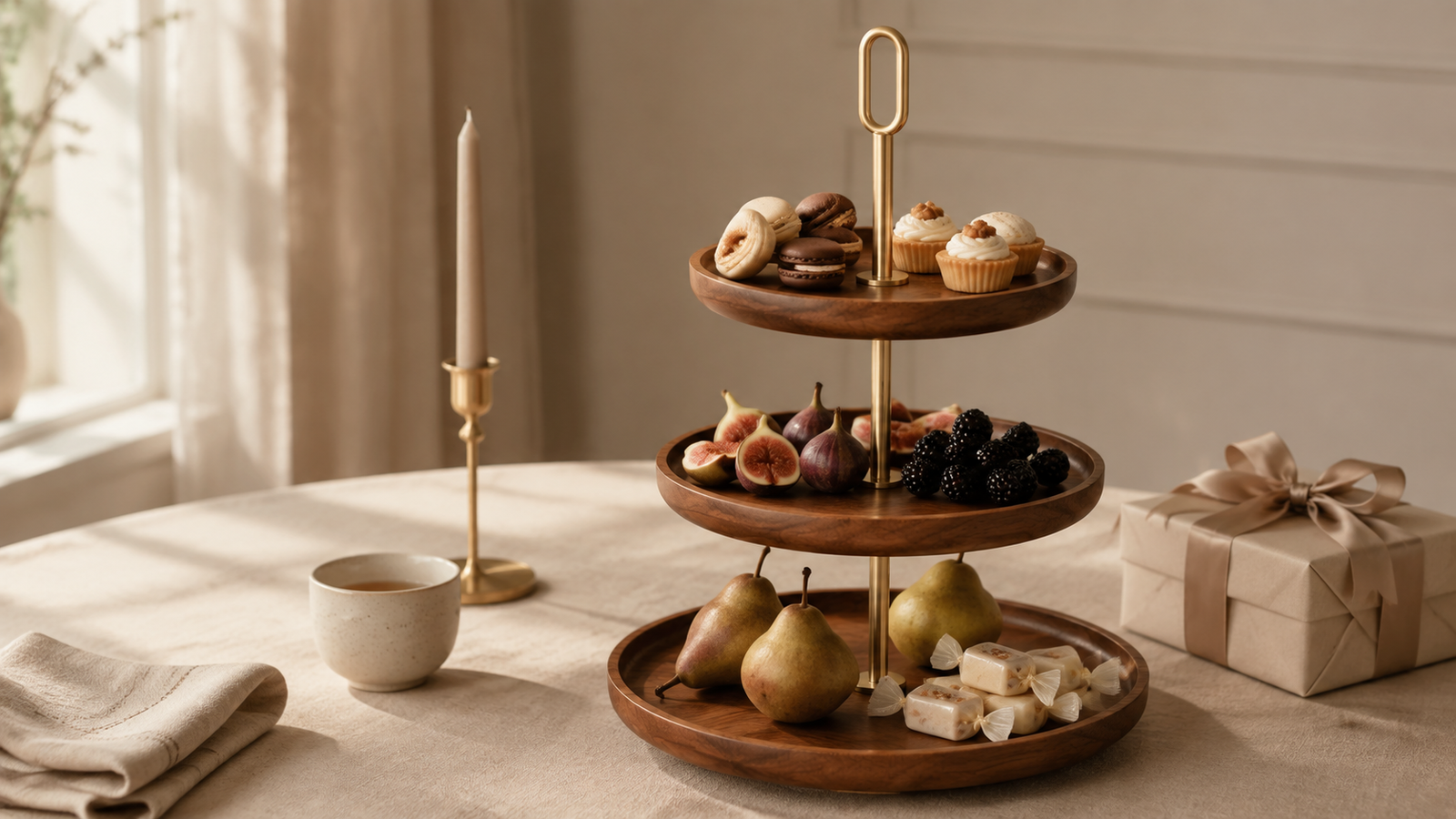
Why Three-Tier Serving Stands Still Matter in a Gift-Ready Tabletop Assortment
For North American home décor and gift buyers, the strongest tabletop products do more than fill a shelf. They create height in a display, solve a clear hosting need, and give shoppers an easy reason to imagine a gift, a celebration, or a finished table.
That is why a three-tier serving stand remains commercially useful. It can hold pastries at a brunch display, packaged treats in a holiday assortment, fruit in a kitchen setting, or small gift items in a boutique. The format is familiar—but its value depends on whether the material, proportions, construction, and packing logic make it feel current and retail-ready.
The Buyer Opportunity: One Format, Multiple Selling Moments
At North American gift and home markets, buyers are increasingly looking for pieces that work across more than one selling moment. A tiered stand can move from everyday entertaining to fall gatherings, holiday gifting, wedding registries, and spring tea-table displays without requiring a completely separate assortment.
This makes the format particularly useful for gift shops, specialty kitchen retailers, department-store tabletop programs, and curated online marketplaces. Instead of being treated as a single-purpose cake stand, it can become a flexible display tool with a clear consumer story.
A well-developed three-tier server should help retailers answer three practical questions: Is it easy to merchandise? Does it feel giftable? Can it justify a meaningful retail price without becoming difficult to ship or replenish?
What Makes a Three-Tier Server Feel More Premium
Material Contrast Creates a Clearer Retail Story
Natural-looking wood brings warmth and domestic familiarity, while satin-finished metal adds a more polished gift and entertaining cue. This pairing can work especially well for buyers who want tabletop products to feel more elevated than basic kitchenware, but less formal than silver-plated serving pieces.
A walnut-toned tray surface also gives food, candles, ornaments, or wrapped confectionery a visually calm base. The metal should support the function rather than dominate the design. Clean center-spine construction and a simple top carry ring usually create a more enduring look than excessive decorative details.
Proportion Matters More Than Extra Decoration
For a three-tier server, the hierarchy of the trays is part of the product’s selling logic. Graduated diameters make the silhouette readable from a distance and allow smaller items to remain visible on the upper levels.
The most useful formats leave enough vertical space between tiers for practical placement and removal. Buyers should look beyond the overall appearance and check whether the stand can actually hold common display items: cupcakes, small pastries, wrapped sweets, ornaments, tea accessories, or seasonal décor.
Assortment Planning: Treat It as a Display Builder
A three-tier serving stand works best when it is not sourced alone. It can anchor a small entertaining collection with trays, bowls, candleholders, decorative boxes, and coordinated tabletop mirrors or frames.
For retail planning, buyers can position it in several ways:
- As a giftable entertaining piece with strong Q4 potential
- As a countertop display item for cafés, bakeries, and specialty food retail
- As a seasonal merchandising fixture for ornaments, treats, or small accessories
- As a premium add-on within a wedding, hostess-gift, or housewarming assortment
For online sellers, the strongest listing story is often not “three trays.” It is “vertical serving and display space for occasions that need more presence than a flat tray can provide.”
Packaging and Reorder Logic Should Be Designed In Early
Tiered products can become inefficient when fully assembled: the carton is larger, the central structure is more vulnerable, and the packing cost rises. A removable center spine offers a more practical solution, provided that the assembly remains stable and intuitive for the end consumer.
Before confirming an order, buyers should review the assembly method, protection for tray edges and metal parts, carton dimensions, instruction clarity, and replacement-part capability. A clean, repeatable structure is more valuable than a complicated decorative feature that increases breakage risk or assembly complaints.
Teruier helps buyers translate this kind of tabletop direction into production-ready collections—balancing material contrast, structural stability, packing efficiency, and channel-specific retail expectations.
Buyer Summary
- Three-tier servers remain relevant because they combine serving, gifting, and vertical display value.
- Wood and satin metal can create a warmer, more premium alternative to basic kitchenware.
- Graduated trays and practical tier spacing matter more than ornamental details.
- The format performs best as part of a coordinated tabletop or seasonal collection.
- Knock-down construction can improve carton efficiency when assembly and stability are carefully controlled.
FAQ
What retail channels are best suited to three-tier serving stands?
They are well suited to gift shops, specialty kitchen retailers, department-store tabletop programs, home décor stores, online marketplaces, and seasonal merchandising collections.
Are three-tier stands only for desserts?
No. They can also display fruit, wrapped sweets, tea accessories, ornaments, candles, small gifts, or countertop merchandise. This flexibility is part of their commercial value.
What should buyers check before sourcing a tiered display stand wholesale?
Buyers should check tray stability, vertical clearance, removable-part construction, material consistency, carton protection, assembly instructions, and whether the final packed size supports the intended price point.
Why is a removable center spine useful?
A removable center spine can reduce packing volume and make export cartons more efficient, while allowing the retailer or consumer to assemble the product when needed.
CTA
Planning a gift-ready tabletop collection requires more than an attractive silhouette. Teruier helps buyers develop serving and display products with coordinated materials, stable structures, practical packaging, and channel-ready retail positioning. Contact our team to discuss your next tabletop sourcing brief.