
MOQ looks like a number. It is usually a product story hiding in plain sight.
A buyer finds a nice lamp.
Warm ceramic base.
Soft fabric shade.
Good size for a console.
Would look lovely beside a mirror, a textured ottoman and a small storage box.
Then the supplier says:
“MOQ applies.”
And suddenly the whole room story becomes a maths problem.
For German buyers, wholesale MOQ explained is not just about getting a lower quantity. It is about understanding what the product needs before it can be produced properly.
Lighting is especially sensitive because it rarely stands alone. A lamp connects with ceramic glaze, shade fabric, metal finish, packaging, storage pieces, mirrors and the whole living room display.
In short: MOQ is not the enemy.
Bad planning is.
Though, to be fair, MOQ can still be quite annoying.
What does wholesale MOQ mean?
Wholesale MOQ means minimum order quantity. It is the smallest quantity a supplier can reasonably produce or supply for one product, finish, colour, material, size, component or packaging method.
In lighting and home décor, MOQ may apply to:
- lamp body style
- ceramic base glaze
- lampshade fabric
- metal finish
- plug or electrical component
- carton type
- decorative storage box finish
- ceramic vase colour
- coordinated room assortment
- custom material or finish
German buyers should ask one simple question:
“Is the MOQ based on the item, the finish, the material, or the whole order?”
That question sounds boring.
Excellent. Boring questions prevent expensive surprises.
Lighting MOQ is often about materials, not just quantity
A table lamp may look like one SKU.
In production, it may involve five different decisions:
| Product Part | MOQ Driver |
|---|---|
| Ceramic base | glaze batch and firing quantity |
| Metal part | coating batch |
| Lampshade | fabric roll or cutting quantity |
| Electrical part | component purchase minimum |
| Packaging | carton and inner protection setup |
This is why home decor materials and finishes matter so much.
If the buyer wants a lamp with a matte beige ceramic base, a linen shade, a warm brass neck and matching decorative storage nearby, each finish may create a different production question.
A product photo says, “Nice lamp.”
The factory hears, “glaze, fabric, coating, carton, component, lead time.”
Very poetic, if you enjoy procurement.
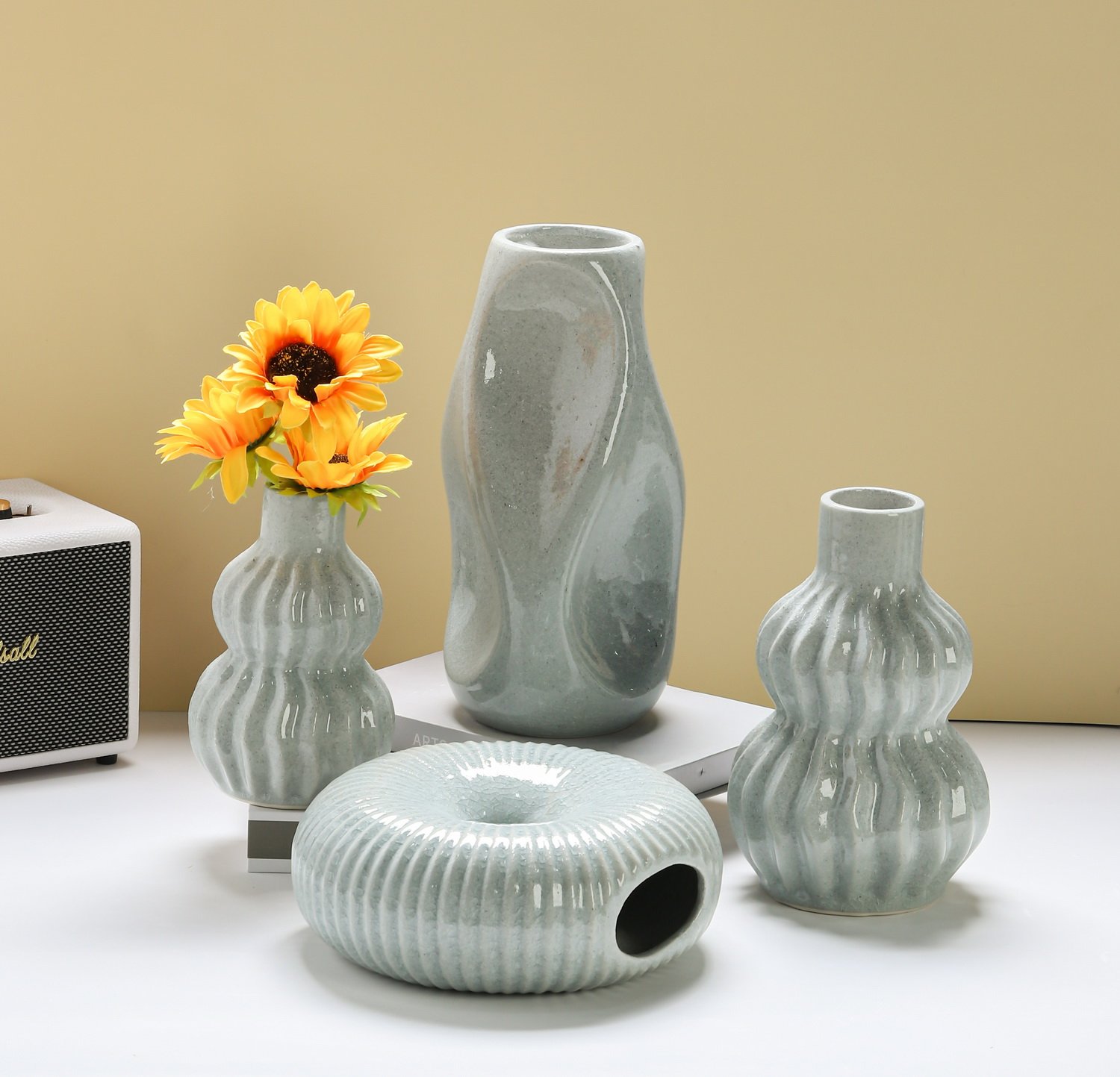
Ceramic glaze finishes: lovely, but not always low-MOQ friendly
Ceramic glaze finishes are useful in Lighting because they make a lamp base feel warmer, softer and more decorative.
Common directions include:
- matte beige
- warm white
- terracotta
- muted green
- stone grey
- cream reactive glaze
- speckled glaze
But ceramic glaze has batch logic.
German buyers should ask:
- Is this a standard glaze?
- Is it already used on other products?
- Is the colour stable across batches?
- What variation is acceptable?
- Does a custom glaze increase MOQ?
- Can the glaze be repeated in reorder?
A custom glaze may look like a small change.
The kiln disagrees.
And the kiln, unfortunately, wins.
Storage and organization: why it belongs in a lighting article
Storage and organization may sound like a separate category.
It is not.
Lighting often sells better when it sits inside a complete room story. A lamp on its own is a product. A lamp beside a storage box, ceramic vase, mirror and ottoman becomes a small living room solution.
That is why decorative storage for living rooms matters.
Useful support products include:
- lidded boxes
- trays
- storage baskets
- ceramic containers
- storage ottomans
- small cabinets
- tabletop organizers
If the lamp, storage box and ceramic vase use related finishes, the display becomes easier to understand.
If they do not, the shelf starts looking like three suppliers had a disagreement and nobody mediated.
Decorative storage for living rooms: MOQ also follows finish logic
A decorative storage product may have its own MOQ issues.
A box may require a specific finish.
A basket may require a material batch.
A ceramic container may require glaze control.
A storage ottoman may require fabric minimums.
German buyers should not treat storage as an add-on after the lighting decision.
If the goal is a coordinated living room story, the buyer should plan:
| Room Product | Finish Question | MOQ Risk |
| Table lamp | ceramic glaze, shade fabric | glaze and fabric MOQ |
| Decorative storage box | painted or textured finish | finish batch MOQ |
| Ceramic vase | glaze colour | firing batch MOQ |
| Storage ottoman | upholstery fabric | fabric roll MOQ |
| Mirror | frame finish | coating MOQ |
This is how small home décor decisions become one sourcing system.
Very efficient when planned early. Very annoying when discovered late.
Designer resource center for interior designers: what it should explain
A good designer resource center for interior designers should not only show pretty lighting photos.
It should help designers and buyers understand product decisions.
For Lighting, a useful resource center should include:
- lampshade material guide
- ceramic glaze finish guide
- metal finish comparison
- lighting + mirror coordination ideas
- storage and organization display ideas
- MOQ explanation by material
- standard vs custom finish guidance
- packaging notes
- lead time notes
- reorder risk notes
A page that only says “create a warm and inviting home” is not a resource center.
It is a greeting card with a lampshade.
Designers need information they can use.
Compare suppliers before comparing prices
German buyers should always compare suppliers before comparing prices.
A lower quote may still be good. But first, check what kind of supplier is behind it.
| Buyer Point | Weak Supplier | Strong Supplier |
| MOQ answer | “MOQ 300” | explains MOQ by material, finish or packing |
| Glaze control | photo-based | sample and tolerance defined |
| Storage products | random add-ons | coordinated assortment logic |
| Material notes | limited | clear finish and surface information |
| Customisation | says yes quickly | explains risk and lead time |
| Reorder support | unclear | discussed before order |
A cheap supplier may save money on the first line.
A reliable supplier may save money across the whole shipment.
The first one looks better in Excel.
The second one usually feels better in real life.
Standard finish vs custom finish
| Buyer Decision | Standard Finish | Custom Finish |
| MOQ | usually lower | usually higher |
| Lead time | faster | slower |
| Reorder | easier | depends on material stability |
| Best use | test order, retail core SKU | project-specific or brand-specific range |
| Risk | less differentiation | colour, material and batch control |
| Buyer advice | start here when testing | use only when the product story is strong |
For lighting, German buyers should often test with standard finishes first.
A standard matte ceramic lamp base may be enough to build a warm room story.
Not every lamp needs to be custom.
Sometimes “good and reorderable” beats “special and exhausting”.
Teruier’s merchant profit solution: MOQ should protect the whole assortment
For this article, Teruier’s merchant profit solution is the right framework.
A buyer does not make money just because one lamp is cheap.
The merchant makes money when the lighting product:
- fits the room story
- coordinates with storage and ceramics
- has stable materials and finishes
- arrives safely
- can be reordered
- is easy to explain
- protects margin across the assortment
That means MOQ should be understood as part of profit planning.
A ceramic lamp base needs glaze control.
Decorative storage needs finish control.
Living room assortments need material coordination.
The supplier needs to explain MOQ before the buyer commits.
Good MOQ planning helps the merchant avoid slow-moving, mismatched, hard-to-reorder products.
Not glamorous.
Very profitable.
FAQ
What does wholesale MOQ mean?
Wholesale MOQ means minimum order quantity. It is the smallest quantity a supplier can produce or supply for a product, finish, colour, material, component or packaging method.
Why does MOQ matter in Lighting?
Lighting products may involve ceramic bases, metal finishes, lampshade fabrics, electrical components and packaging. Each part can affect MOQ.
Why are ceramic glaze finishes important for lighting buyers?
Ceramic glaze finishes affect the look, quality, reorder stability and room coordination of lamp bases and related ceramic décor products.
Why does storage and organization belong in lighting sourcing?
Lighting often sells as part of a living room or bedroom story. Storage boxes, trays, baskets and ottomans help complete the display and increase basket value.
What is decorative storage for living rooms?
It includes lidded boxes, baskets, trays, storage ottomans, ceramic containers and small cabinets that hide clutter while supporting the room style.
What should a designer resource center for interior designers include?
It should include material guides, ceramic glaze notes, finish comparisons, MOQ explanations, packaging guidance and room coordination examples.
Why should buyers compare suppliers before comparing prices?
Because a cheaper supplier may have vague MOQ, weak material control, poor finish consistency or unclear reorder support. Supplier capability matters before price comparison.
How should buyers handle custom finishes?
Use standard finishes for testing and custom finishes only when the room story, quantity and reorder potential justify the extra MOQ and lead time.
Final thought: MOQ becomes easier when the buyer plans the room
For German buyers, wholesale MOQ explained is really about understanding the room behind the product.
A lamp is not only a lamp.
It connects with ceramic glaze, storage, mirrors, ottomans, packaging and shelf logic.
If the buyer plans the assortment early, MOQ becomes easier to understand.
If the buyer treats every product separately, MOQ becomes a surprise.
And in sourcing, surprises are rarely charming.



