
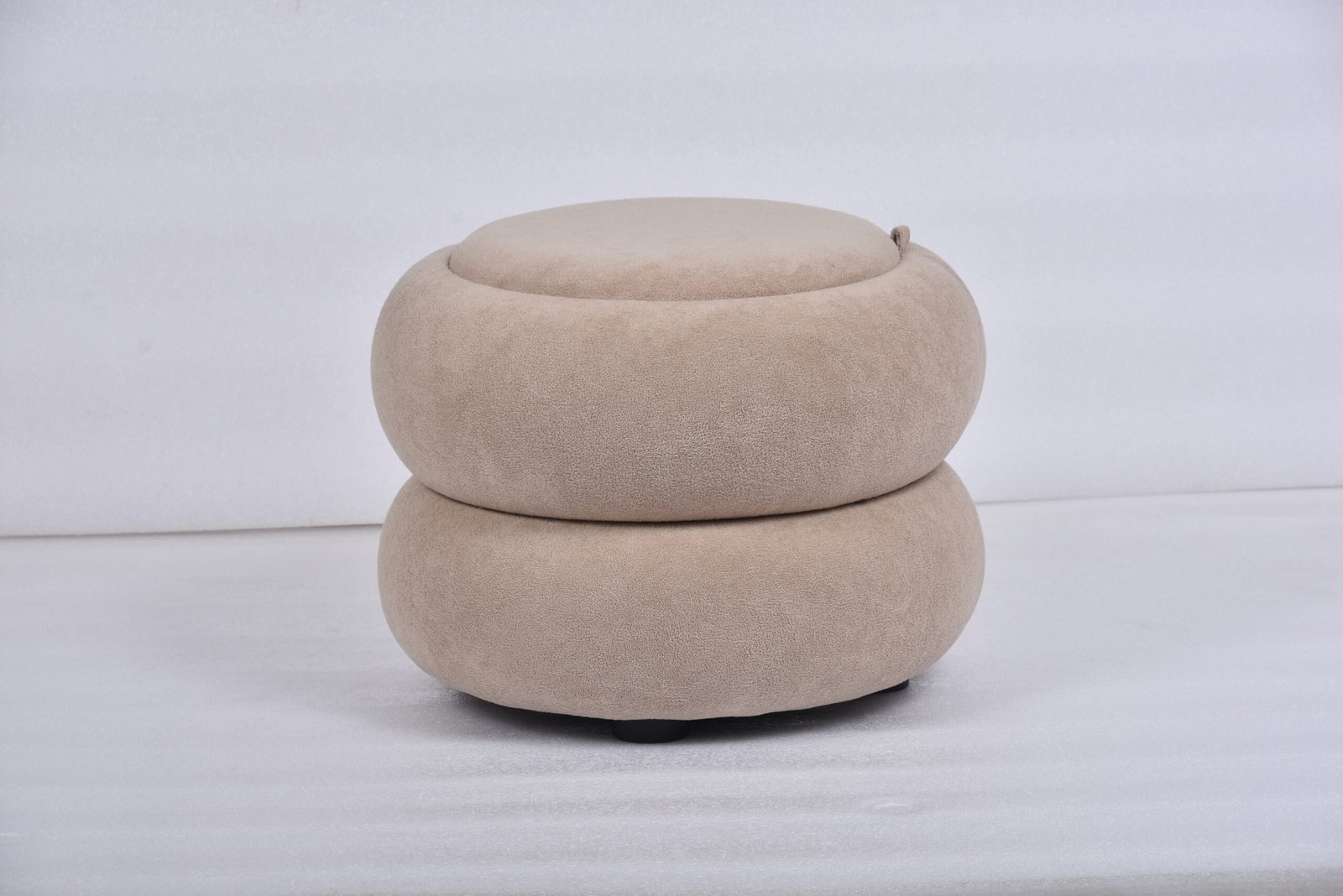
Interior designers do not need unlimited options
Unlimited options sound wonderful.
Custom size.
Custom finish.
Custom fabric.
Custom frame.
Custom ottoman shape.
Custom storage bench.
Custom everything.
Lovely. Until the project slows down, the sample changes, the carton size becomes a surprise, and nobody remembers which finish was approved.
For German buyers and interior designers, the real value of a factory direct supplier for interior designers is not that everything can be changed.
The real value is knowing what should be changed — and what should stay stable.
That is the difference between useful customisation and sourcing theatre.
What is a factory direct supplier for interior designers?
A factory direct supplier for interior designers is a supplier that connects designers and buyers more closely with production, materials, finishes, packaging and product development.
A good supplier should help with:
- mirror finishes
- ottoman upholstery options
- storage ottoman wholesale
- custom size vs custom finish decisions
- retail-friendly finishes
- sample development
- MOQ and lead time
- carton and packaging notes
- reorder stability
- project product notes
A weak supplier says, “Yes, we can make.”
A good supplier says, “Yes, but this change affects MOQ, packaging, lead time and reorder stability.”
Less exciting.
Much more useful.
Custom size vs custom finish: the decision designers should not rush
The question of custom size vs custom finish appears in almost every interior design sourcing discussion.
Designers want the product to fit the room. Buyers want the product to stay commercially sane. Factories want the product to be producible without turning the sample room into a small battlefield.
Here is the practical difference:
| Decision | Custom Size | Custom Finish |
|---|---|---|
| What changes? | dimensions, structure, carton, sometimes hardware | fabric, colour, frame finish, glaze, surface |
| Best for | project-specific rooms, special spaces, fixed layouts | retail refresh, material coordination, designer palette |
| Main risk | longer lead time, new packaging, higher tolerance risk | colour variation, material availability |
| Reorder difficulty | usually higher | usually easier if documented |
| Example | custom storage bench length | new fabric for storage ottoman wholesale range |
For most German buyers, custom finish is often the safer first move.
Changing the finish can make a product feel project-specific while keeping the structure stable.
Changing the size often brings new carton data, new cost, new lead time and new opportunities for everyone to suffer politely.
Retail-friendly finishes: not boring, just easier to sell
Retail-friendly finishes are finishes that customers understand quickly and buyers can reorder without drama.
Useful directions include:
- soft black metal
- brushed brass
- champagne gold
- warm nickel
- taupe woven fabric
- cream bouclé
- linen-look neutral upholstery
- matte beige ceramic
- soft terracotta
- warm wood tone
These finishes work because they are easy to place in real homes.
A retail-friendly finish is not necessarily plain. It simply does not require the customer to redesign the entire room around one dramatic object.
That is helpful.
A storage ottoman in taupe woven fabric can work in bedrooms, hallways and living rooms.
A brushed brass mirror can work with warm ceramics and wood tones.
A matte beige ceramic vase can support the shelf without shouting.
Good finish strategy is quiet.
Bad finish strategy enters the room wearing too much perfume.
Storage ottoman wholesale: small product, strong commercial use
Storage ottoman wholesale is useful for interior designers and German buyers because the product solves several problems at once.
It can be:
- seating
- footrest
- hidden storage
- bedroom accent
- hallway helper
- small living room solution
- companion piece for mirrors and benches
For designers, this is practical. For buyers, it creates good retail explanation.
But the product must be controlled.
Buyers should check:
| Area | What to Check |
|---|---|
| Fabric | handfeel, colour, durability, batch repeat |
| Structure | frame strength, lid fit, storage depth |
| Foam | support and shape retention |
| Hardware | hinge quality if lid opens |
| Packaging | compression, carton strength, protection |
| Reorder | same fabric and finish availability |
A storage ottoman should not just look soft.
It should open properly, sit firmly and survive normal use.
Otherwise it is not multifunctional.
It is just a small upholstered disappointment.
Cheap supplier vs reliable supplier
The difference between cheap supplier vs reliable supplier usually appears after the first order.
The cheap supplier may win the quote.
The reliable supplier often wins the reorder.
| Buyer Point | Cheap Supplier | Reliable Supplier |
|---|---|---|
| First price | attractive | may be higher |
| Finish control | uncertain | documented |
| Customisation | says yes quickly | explains risk |
| Packaging | often basic | product-specific |
| Specs | vague | clear |
| Reorder | risky | more stable |
| Long-term cost | may rise through defects | easier to control |
German buyers should not only ask, “What is the price?”
They should ask:
Can this supplier repeat the product?
Can they keep the finish stable?
Can they pack it properly?
Can they explain what changes when we customise?
A cheap product that creates complaints is not cheap.
It is delayed cost.
B2B home decor manufacturer: capacity is not enough
A B2B home decor manufacturer should not only be able to produce volume.
Volume without control is just a bigger problem.
For interior designers and German buyers, a useful manufacturer should support:
- retail-ready product families
- finish coordination
- stable material sourcing
- project-friendly packaging
- clear specifications
- sample approval notes
- customisation advice
- reorder planning
A good manufacturer helps turn design intent into product logic.
Not just “here are 200 items, please choose”.
That is not sourcing support.
That is a catalogue avalanche.
Retail-ready home decor assortment: products must work together
A retail-ready home decor assortment is not a random mix of nice pieces.
It needs room logic.
A practical assortment might include:
| Room Story | Main Product | Support Products |
|---|---|---|
| Small Entryway | wall mirror | storage ottoman, tray, ceramic bowl |
| Bedroom Corner | brass mirror | upholstered bench, matte ceramic vase |
| Living Room Storage | storage ottoman | decorative box, tray, small side table |
| Designer Neutral Range | soft black mirror | taupe ottoman, beige ceramics |
| Community Store Display | round mirror | basket, storage ottoman, ceramic accent |
This helps designers and buyers explain the offer quickly.
The customer sees the room use immediately.
No long lecture required.
Teruier’s value translation: from design request to product decision
For this article, Teruier’s value translation approach fits best.
Interior designers often speak in room language:
“We need it warmer.”
“The storage piece should feel softer.”
“The finish is too cold.”
“The client wants custom, but not expensive.”
“The range should look retail-ready.”
Factories speak in production language:
“What size?”
“What fabric?”
“What finish?”
“What MOQ?”
“What carton?”
“What lead time?”
Teruier’s value translation connects both sides.
It turns vague design requests into practical product decisions:
- “warmer” becomes brushed brass or warm wood tone
- “softer storage” becomes taupe upholstered storage ottoman
- “retail-ready” becomes coordinated mirrors, ottomans and ceramics
- “custom but controlled” becomes custom finish first, custom size only when necessary
- “reliable sourcing” becomes clear specs, packaging and reorder standards
That is where a factory direct supplier becomes valuable.
Not by saying yes to every idea.
By helping buyers choose the right change.
FAQ
What is a factory direct supplier for interior designers?
A factory direct supplier for interior designers connects designers and buyers more directly with production, materials, finishes, samples, packaging, MOQ, lead time and customisation support.
What is the difference between custom size vs custom finish?
Custom size changes product dimensions and often affects structure, carton size, lead time and cost. Custom finish changes fabric, colour, glaze or frame finish and is often easier to manage for retail and project use.
Why are retail-friendly finishes important?
Retail-friendly finishes are easy to place, easy to explain and easier to reorder. They help products work across real homes, stores and interior projects.
What should buyers check in storage ottoman wholesale?
Buyers should check fabric quality, lid function, frame strength, foam support, storage depth, hinge quality, carton protection and fabric repeatability.
How should German buyers compare cheap supplier vs reliable supplier?
They should compare finish stability, packaging, specifications, communication, customisation risk and reorder performance, not only unit price.
What makes a B2B home decor manufacturer useful for interior designers?
A useful manufacturer provides product specs, material options, finish guidance, sample support, packaging details, project logic and stable reorder capability.
What is a retail-ready home decor assortment?
It is a product group that works together by room use, material, finish, price level and customer explanation. Mirrors, ottomans, ceramics and storage pieces should support one clear story.
Final thought: the best supplier helps designers make fewer bad decisions
For German buyers and interior designers, a good factory direct supplier for interior designers should not push endless options.
It should help reduce bad decisions.
Custom finish before custom size.
Reliable supplier before cheap supplier.
Retail-friendly finishes before dramatic experiments.
Storage ottomans with real function, not just soft fabric.
A retail-ready assortment, not random products.
Good sourcing is not about changing everything.
It is about knowing what to keep stable, what to adjust and what to leave alone before the project becomes more complicated than the room itself.



