Interior designers do not need more “interesting” products
Interior designers are constantly shown interesting products.
Interesting ottomans.
Interesting benches.
Interesting ceramics.
Interesting wall décor.
Interesting things that are, unfortunately, impossible to explain to a normal client without sounding like a design student defending a chair made of sadness.
For German interior designers and buyers, the better question is not:
“Is this product interesting?”
The better question is:
“Can this product solve a room problem, fit the project, ship properly, and be explained in ten seconds?”
That is where a factory direct supplier for interior designers becomes useful.
Not because factory direct automatically means better. It does not. A factory can still be vague, slow, and wildly optimistic.
The real value comes when the supplier helps turn design ideas into usable, spec-ready, easy-to-explain home décor.
What is a factory direct supplier for interior designers?
A factory direct supplier for interior designers is a supplier that connects designers more closely with production, materials, finishes, sampling, packaging, and customisation decisions.
A useful supplier should help with:
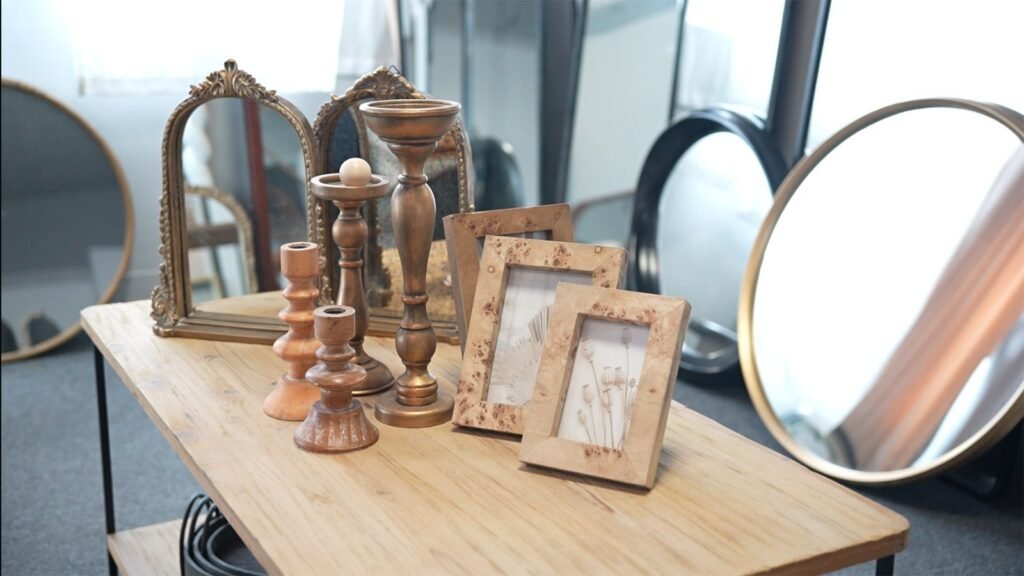
- mirror and wall décor options
- upholstered storage bench development
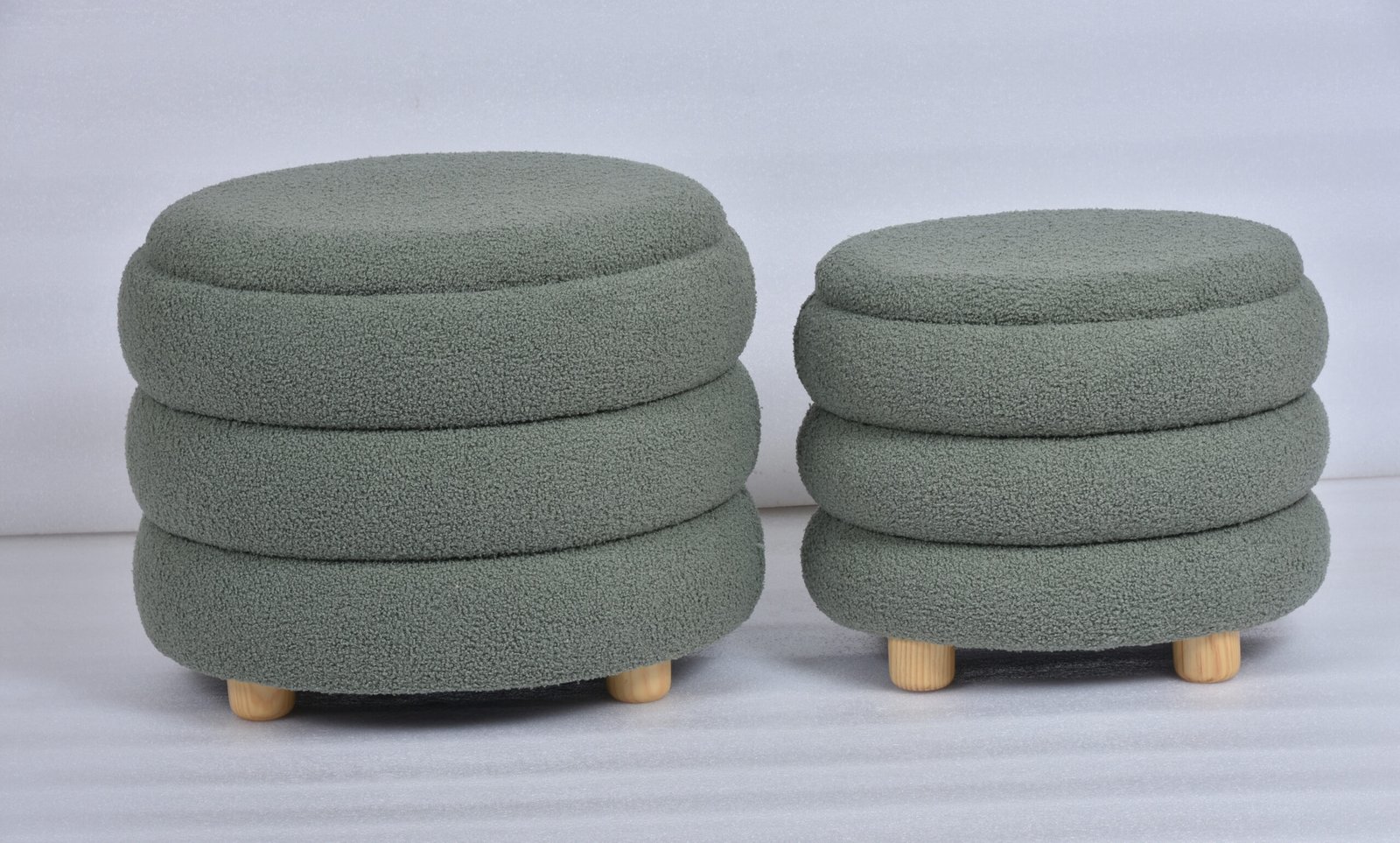
- swivel ottoman sourcing
- ottoman upholstery materials
- tonal ceramic finishes
- artichoke ceramic decor
- storage and organization products
- MOQ and lead time
- carton and packaging details
- finish and material notes
A weak supplier says, “Yes, we can make.”
A better supplier says, “Yes, but here is the fabric, finish, size, carton, lead time, and risk point.”
The second answer is not sexy.
It is useful. German buyers tend to appreciate that.
Easy to explain home decor sells faster
Easy to explain home decor matters because clients rarely buy from a pure design theory.
They buy because the product solves something.
| Product | Weak Explanation | Strong Explanation |
|---|---|---|
| Upholstered storage bench | “Elegant bedroom piece” | “A bed-end bench with hidden storage for blankets and cushions” |
| Swivel ottoman | “Flexible accent seat” | “A small rotating seat for dressing corners or compact living rooms” |
| Artichoke ceramic decor | “Sculptural ceramic object” | “A textured ceramic accent for shelves, consoles, and table styling” |
| Tonal ceramic vase | “Minimal ceramic decor” | “A neutral ceramic piece that works with mirrors, wood, and upholstery” |
If a designer needs five minutes to explain why the product belongs in the room, the product may not be clever.
It may just be hard work.
Upholstered storage bench: function that looks finished
An upholstered storage bench is one of the most practical products for interior designers.
It works in:
- bedrooms
- hotel rooms
- entryways
- dressing areas
- serviced apartments
- community home stores
- compact living spaces
It gives seating, storage, and visual softness in one piece.
For German buyers, the important checks are:
- fabric handfeel
- lid opening quality
- hinge strength
- storage depth
- foam density
- frame stability
- upholstery tension
- carton protection
- fabric repeatability
A storage bench should not merely look nice at the foot of a bed.
It should open properly, sit firmly, and hide the things clients do not want to look at.
That is not glamorous. That is life.
Swivel ottoman: small, flexible, but not a toy
A swivel ottoman can be useful when space is limited.
It works well for:
- dressing tables
- bedroom corners
- compact apartments
- vanity areas
- small lounge corners
- boutique hotel rooms
But the swivel function needs control.
German buyers should check:
| Detail | Why It Matters |
|---|---|
| Swivel mechanism | must rotate smoothly and safely |
| Base stability | prevents wobbling |
| Seat height | affects usability |
| Upholstery | visible and touchable |
| Foam support | affects comfort |
| Fabric repeat | protects reorder consistency |
| Carton protection | prevents deformation |
A swivel ottoman should feel clever.
It should not feel like a stool that discovered movement and got overexcited.
Ottoman upholstery materials: where quality becomes visible
Ottoman upholstery materials decide whether a product feels retail-ready or suspiciously temporary.
Useful directions include:
- taupe woven fabric
- cream bouclé
- linen-look polyester blend
- muted velvet
- soft chenille
- subtle stripe
- textured neutral fabric
For German interiors, the safest options are usually textured neutrals. They work across many rooms and pair well with mirrors, ceramics, storage benches, and wood furniture.
Strong colours can work, but they need clearer project logic.
A burnt orange ottoman may look excellent in the right room.
In the wrong room, it looks like the furniture made a personal announcement.
Artichoke ceramic decor: character without becoming silly
Artichoke ceramic decor can be a good small accent product for shelves, consoles, table styling, and boutique displays.
It has shape, texture, and a slightly playful food-inspired charm.
But it needs control.
Buyers should check:
- leaf detail clarity
- glaze finish
- base stability
- ceramic thickness
- surface quality
- packaging protection
- decorative or functional use
- reorder colour range
An artichoke ceramic piece should look crafted.
It should not look like a vegetable had a difficult week at the factory.
For interior designers, this kind of product works best as a small accent — not the centre of the room. Nobody wants the artichoke to become the main character.
Tonal ceramic finishes: quiet products that help the room work
Tonal ceramic finishes are extremely useful for designers because they support many room styles without fighting for attention.
Good directions include:
- warm white
- soft beige
- taupe
- stone grey
- muted green
- terracotta
- cream reactive glaze
These finishes work well with:
- brass mirrors
- black metal frames
- wood furniture
- neutral ottomans
- upholstered benches
- trays and storage pieces
Tonal ceramics are especially good for home decor for community home stores because they are easy to place, easy to explain, and less risky than loud decorative pieces.
They do not need to shout.
They just need to make the shelf look considered.
Home decor for community home stores: keep the offer practical
For home decor for community home stores, products should be easy to understand and easy to combine.
A useful assortment could include:
| Product Role | Example |
|---|---|
| Core mirror | round black or brass wall mirror |
| Seating / storage | upholstered storage bench |
| Flexible seat | swivel ottoman |
| Ceramic accent | artichoke ceramic decor |
| Shelf support | tonal ceramic vase or bowl |
| Add-on product | tray, basket, decorative box |
This gives the store a small room story.
Not just random products.
A customer can see the mirror, bench, ottoman, ceramic and storage piece together and understand the use immediately.
That is good retail.
Much better than making customers solve the display like a puzzle.
Teruier’s value translation: from design idea to usable product
For this article, Teruier’s value translation approach fits best.
Interior designers often say:
“We need something softer.”
“The room needs more storage.”
“This corner needs a small seat.”
“The shelf needs a sculptural accent.”
“The product should feel calm, not boring.”
Factories ask:
“What size?”
“What fabric?”
“What glaze?”
“What carton?”
“What MOQ?”
“What lead time?”
Teruier’s value translation connects both sides.
It turns design language into buyer-ready product decisions:
- “more storage” becomes upholstered storage bench with hinge and carton specs
- “small flexible seat” becomes swivel ottoman with stable base and upholstery notes
- “sculptural accent” becomes artichoke ceramic decor with glaze and packaging control
- “calm shelf story” becomes tonal ceramic finishes
- “community store ready” becomes easy-to-explain home décor with clear room use
That is what makes a factory direct supplier useful.
Not just making products.
Making product decisions clearer.
Factory direct supplier vs ordinary product supplier
| Buyer Need | Ordinary Product Supplier | Factory Direct Supplier for Interior Designers |
|---|---|---|
| Product offer | catalogue items | product + material discussion |
| Customisation | limited or vague | size, finish, fabric, glaze guidance |
| Interior design use | visual only | room-use logic and product notes |
| Packaging | sometimes basic | product-specific discussion |
| Reorder | uncertain | material and finish records |
| Buyer result | possible product order | clearer project and retail decisions |
Factory direct sourcing is not about customising everything.
That would be chaos with a purchase order.
It is about knowing which parts should change and which parts should stay stable.
FAQ
What is a factory direct supplier for interior designers?
A factory direct supplier for interior designers connects designers and buyers more directly with production, material options, finish choices, sample development, packaging, MOQ, lead time, and customisation support.
Why is easy to explain home decor important?
Easy to explain home decor helps clients and customers understand quickly where the product goes, what problem it solves, and why it belongs in the room.
Why is an upholstered storage bench useful for interior designers?
It combines seating, storage, and visual softness. It works in bedrooms, entryways, hotel rooms, serviced apartments, and compact homes.
What should buyers check in a swivel ottoman?
Buyers should check swivel mechanism, base stability, seat height, fabric quality, foam support, upholstery, carton protection, and reorder consistency.
Which ottoman upholstery materials are useful for German projects?
Textured neutrals, cream bouclé, taupe woven fabric, linen-look blends, muted velvet, chenille, and subtle stripes are useful because they are flexible and easy to place.
Is artichoke ceramic decor suitable for interior designers?
Yes, as a small accent for shelves, consoles, table styling, and boutique displays. Buyers should check glaze, leaf detail, stability, packaging, and decorative use.
Why are tonal ceramic finishes useful?
Tonal ceramic finishes are easy to combine with mirrors, ottomans, benches, wood, metal, and storage products. They help create a calm and retail-ready room story.
Final thought: designers need useful products, not just attractive ones
For German interior designers, the best factory direct supplier for interior designers is not the one with the biggest catalogue.
It is the one that helps choose products with clear room use, stable materials, sensible packaging, and easy explanations.
An upholstered storage bench should solve storage.
A swivel ottoman should add flexible seating.
Artichoke ceramic decor should add controlled character.
Tonal ceramic finishes should support the whole room.
Good design products should not make the project harder.
They should make the room easier to finish.