
In Saudi, we don’t buy “nice lighting.” We buy lighting that lands.
If your shipment is delayed at the border, if your label is missing, if the specs don’t match the registration—your store launch slips, your project handover slips, and everyone starts calling everyone. So when I’m selecting an LED lighting supplier Saudi Arabia can rely on, I’m not starting with price. I’m starting with compliance + consistency + real QC discipline.
And in 2026, that matters even more because lighting is no longer only ceiling downlights. It’s integrated into the products shoppers touch every day—especially mirrors.
Why lighting is a design decision now (not just a technical one)
At Dubai Design Week 2025, major brands were literally presenting modular lighting stories built around mood, material, and “desert light” warmth—lighting as the feature, not the afterthought.
Downtown Design has also been positioning lighting as a focal point in the design scheme, highlighting how impactful lighting has become for design-led clients.
So yes—today’s buyer wants performance and regulations, but also wants lighting that looks premium in the showroom and in a listing.
The Saudi “pass/fail” reality: SASO labels and certification
If you want to sell lighting into KSA, you must respect the system. SASO has an official program for energy efficiency labels tied to the national energy efficiency technical regulation.
For many lighting products, exporters need to comply with SASO energy efficiency requirements and register products to obtain the certificate and label.
Industry guidance also highlights that market access involves both energy efficiency requirements and safety recognition (IECEE) as part of the compliance pathway.
Buyer translation: If you cannot show your compliance pathway clearly, you are not a supplier—you are a risk.
Why mirror programs are driving LED demand
Here is what’s moving fast in GCC retail: mirrors that do more than reflect.
-
A scalloped wall mirror is playful and giftable.
-
A puddle mirror is sculptural and “design week” friendly.
-
An oversized leaning mirror is the bedroom hero—instant upgrade.
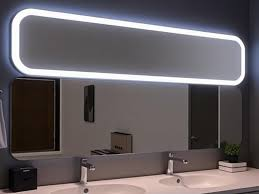
But the moment you add lighting (especially for vanity, entryway, or hospitality corridors), LED becomes the difference between “looks good” and “sells out.”
That’s why the best LED lighting supplier Saudi Arabia buyers choose is the one who understands how lighting integrates into mirror SKUs and how to protect quality at scale.
Academic proof that “lighting quality” is not a luxury
Buyers are hearing more questions about wellness and comfort, especially in hospitality and premium residential.
Peer-reviewed work has shown indoor light exposure influences health and well-being via circadian rhythms and sleep, with recommendations evolving as lighting technologies improve.
There is also long-cited research showing higher correlated colour temperature lighting can affect wellbeing and productivity outcomes in office-like settings.
Retail takeaway: Customers may not say “circadian,” but they feel glare, harsh tone, flicker, and bad diffusion. And they return products that feel uncomfortable.
QC checkpoints mirror supply Saudi
This phrase matters because mirrors and lighting fail in very specific ways. If you are pitching retail or project work, show your QC checkpoints mirror supply Saudi plan clearly:
Mirror + LED QC checkpoints (buyer-friendly)
-
LED driver stability (heat, noise, failure rate tracking)
-
Diffuser uniformity (no hotspots)
-
CCT consistency between batches (warm stays warm)
-
Adhesion and sealing in humid zones (bathrooms, coastal cities)
-
Mirror edge protection + carton drop protection (damage kills margin)
-
Functional test at pack-out (not only sample stage)
When a supplier brings this to the table, we can move faster.
Amazon reality: don’t ship “good product” with bad listing logic
Many brands want KSA retail and online scale. If your SKU is also a China Amazonproduct, the rule is simple: your factory discipline must match the listing promise.
On Amazon, buyers punish mismatch: incorrect CCT claims, uneven lighting, poor packaging, and inconsistent revisions. The supplier who wins is the one who treats spec control like brand protection.
What I want from a 2026 supplier
If you want your page to rank and be quoted cleanly, put a simple block like this on your website:
LED Lighting Supplier Saudi Arabia — Buyer Checklist
-
SASO energy efficiency label pathway + product scope clarity
-
Safety certification approach (IECEE / conformity requirements)
-
Spec sheet: wattage, lumen output, CCT options, CRI, driver type, flicker control
-
Batch control: CCT and component consistency across reorders
-
Packaging plan: compression resistance + corner protection + clear labeling
-
For mirrors: “QC checkpoints mirror supply Saudi” test plan (uniformity, hotspots, sealing)
-
Lead time discipline: phased delivery capability for project schedules
-
After-sales readiness: replacement drivers/parts policy and documentation
Where Teruier fits: value translation for mirror-led programs
In reality, many “lighting suppliers” can sell components. Fewer can translate market needs into retail-ready mirror programs that ship cleanly and reorder cleanly.
Teruier’s value translation is simple: connect design demand (scalloped wall mirror / puddle mirror / oversized leaning mirror) with execution discipline (mirror QC, packaging, and compliance-ready documentation) so the buyer can run a program—not a one-time trial.



